


The sun rises in our grief. The sun rises in our suffering. The sun rises in our pain. It rises as a beautiful and terrible reminder that life goes on, even when the world as we knew it has come to an end.
There is so much loss in life, yet we often live with a certain level of denial about its inevitability. We are uncomfortable with pain, perhaps because it reminds us of our own impermanence. When someone dies, our knee-jerk response is often, “They’re in a better place.” We reach for reassurance, for meaning, for something that might make the pain more bearable. In doing so, we can inadvertently minimise the grief of the person standing before us.

What is helpful in loss of any kind is the willingness to recognise pain. To put aside our own discomfort long enough to make space for the hurt, questions, and emotions that accompany grief.
Because grief is not limited to death.
We grieve the ending of friendships, the loss of relationships, the jobs we weren’t offered, the dreams we couldn’t realise, and the identities we can no longer inhabit. We grieve the deconstruction of our faith, the places we have left, and the futures we once imagined for ourselves.
Anything that creates an earthquake in our emotional and spiritual lives can leave us navigating the aftershocks.
Grief honours the significance of what we have lost, even when what we have lost is not a person.
The Losses We Don’t Always Recognise
As a child, I was not afraid of death.
My grandfather was the first person I experienced dying. Months after he passed, I continued setting a place for him at the table. I slept with a framed photograph of him beneath my pillow. I loved him before he died and after.
Looking back, I can see my first lesson in death was that love and loss are inseparable. To love someone is to be vulnerable to their absence. Grief is the cost of having been changed by another person, of having shared a life that can never be replicated in quite the same way.
But death is not the only experience that asks us to confront our vulnerability.
Sometimes we lose people who are still alive. Sometimes we lose relationships with people who were once central to our lives. Sometimes we lose the possibility of a relationship we had hoped would be different. We might grieve the parent we needed but never had, the friendship we thought would last forever, or the version of ourselves who believed things would turn out differently.
These losses can be particularly difficult to articulate because there is no funeral, no socially recognised ritual, and sometimes no permission to grieve at all.
We are expected to move on. To be grateful for what we have. To recognise that things could be worse.
But suffering is not a competition, and grief does not require external validation to be real. You are allowed to grieve what mattered to you.
Grieving the Life You Didn’t Live
Some of our deepest grief arises not from what happened, but from what didn’t.
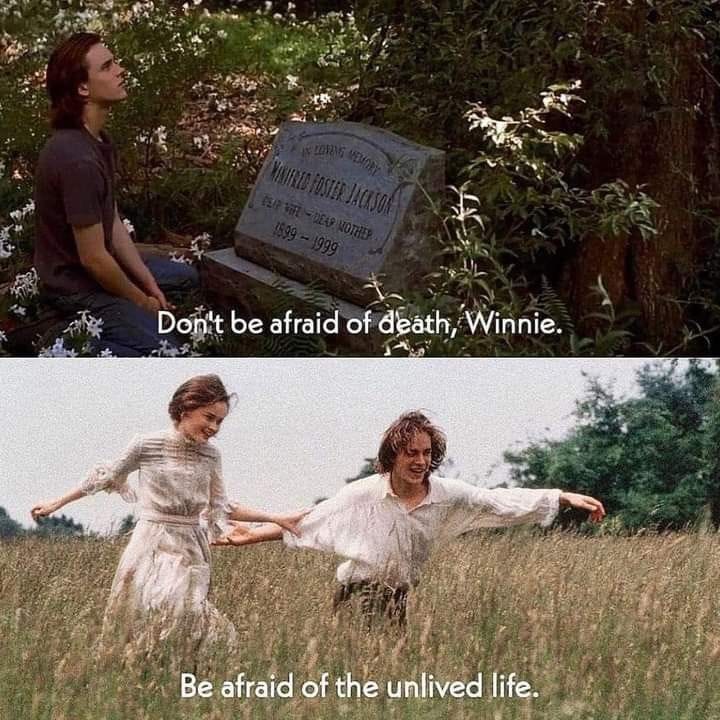
The relationship that never became what you hoped. The career you couldn’t pursue. The children you didn’t have, or the parenthood you imagined differently. The person you might have become under different circumstances.
There is grief in recognising that certain possibilities are no longer available to us. We can spend years carrying an imagined future, sometimes without realising how much of our identity has become attached to it.
And then something changes.
We reach a point where we can no longer maintain the illusion that things will unfold as we once expected. We are confronted with the reality of what is, and with the possibility that life might look very different from what we imagined.
This, too, deserves to be grieved.
We can mourn the life that could have been without deciding that the life we have is somehow lesser. We can acknowledge disappointment without condemning ourselves for the choices we made or the circumstances we couldn’t control.
We may not stop wondering what might have been. But we can wonder without it preventing us from inhabiting the life that is here.
The Grief of Becoming
We often think of grief as something that happens when life takes something away from us. But grief can accompany the things we choose, too.
Moving to a new city. Getting married. Having children. Leaving a career. Changing our beliefs. Choosing a different way of living.

Even the experiences we desperately want can involve loss.
Every meaningful choice closes some doors while opening others. To say yes to one possibility is, inevitably, to say no to others. We cannot live every version of our lives, pursue every dream, or remain every version of ourselves.
There is grief in this limitation.
We might be excited about a new chapter while mourning the one that has ended. We might love our new life while missing the people, places, and freedoms that belonged to our old one. We might feel relief after leaving a relationship while grieving the future we had hoped to build together.
These emotions do not cancel each other out.
Our culture often encourages us to frame personal growth as an uncomplicated journey towards something better. But becoming ourselves is rarely so tidy. Growth can require us to release identities that once protected us, beliefs that once gave us certainty, and relationships that once helped us understand who we were.
Sometimes we grieve because something has been taken from us. Sometimes we grieve because we have finally chosen ourselves.
Both deserve compassion.
Making Space for Grief and Gratitude
We experience so much grief in our lives and rarely have the opportunity to honour its full gravity.
Grief requires space to acknowledge what could have been, how life might have unfolded differently, and what we have had to leave behind. It can bring us to a jarring halt, interrupting what we had come to consider normal and asking us to confront the reality of our circumstances.
We cannot always make sense of our losses while we are living through them. Sometimes we simply need to feel what is there, without rushing towards a lesson or searching for a silver lining.
And, eventually, there may be room for gratitude.
Not gratitude for the suffering itself, or an insistence that everything happened for a reason. Rather, gratitude for what we experienced, what we learned, the people who changed us, and the parts of ourselves we discovered along the way.
Gratitude does not justify what happened. It acknowledges the impact.
We can be grateful for a relationship and grieve its ending. We can appreciate what a chapter taught us while recognising that it was painful to live through. We can honour the person we were while acknowledging that we can no longer return to being them.
Grief and gratitude are not mutually exclusive. We do not have to choose between acknowledging what something cost us and recognising what it gave us.
Perhaps this is part of what it means to live fully: allowing ourselves to hold the complexity of our experiences without forcing them into a single narrative of tragedy or triumph.
We Do Not Get Over Grief
Few things in life are permanent. People come and go. Circumstances change and shift. A tight grasp cannot make these things stay.
We do not move on from grief as though it were a mountain to ascend and leave behind. We move through it. We descend into the mountain of grief, and we leave parts of ourselves within it.
Grief changes us. We are changed by grief.
Sometimes what needs to die is a relationship. Sometimes it is an identity, a belief, a coping strategy, or the expectation that life will unfold according to our plans. Letting go does not mean that these things were meaningless. It means recognising that their place in our lives has changed.
We can honour what has been without insisting that it must remain.
Grief is one of the ways we learn to love what is impermanent. It allows us to acknowledge the significance of what we have experienced while accepting that we cannot preserve it indefinitely.

The sun will rise tomorrow. It will rise whether we are ready or not, whether our grief has softened or remains as sharp as ever. Life will continue to invite us into new experiences, new relationships, and new versions of ourselves.
We do not have to rush towards them.
We can pause in the aftermath of what has changed. We can honour what we have lost, what we hoped for, and who we have been.
Life is full of hope and loss, grief and intimacy, sorrow and longing. These are not interruptions to the experience of being human. They are part of it.
Perhaps they are all invitations from life itself to step into our fullness, without judging, evaluating, or immediately trying to change what we find.
To grieve is to acknowledge that something mattered. And to recognise how you were changed by it.